Enter YouTube producer Sabconth, who inserts a montage/barrage of critically damning quotes, fades out Cavill's audio, digitally pans and zooms in to Affleck, and replaces the substance of Cavill's response with the first verse of Simon and Garfunkel's "The Sounds of Silence." Sabconth's text montage conceals Affleck's grin and laugh in reaction to the phrase "mixed response," and cuts before the small smile he gives after his brief answer. (Presumably incidentally, the manipulated clip suggests Cavill is a blathering fool; wrong-headed and/or deceptive as his response may be, it's not foolish. The man is doing his job.) That clip, under the title "Batman V Superman - Sad Affleck," goes viral.
Along with some 14 million others, I Laughed Out Loud. And as soon as the clip ended, I Googled "Ben Affleck depression." Sure enough, Affleck's celebrity and recent divorce bubbled up: both "depression" over the divorce, and Depression as a cause of it. (This just in: Depressed people can be hard to live with.) I can't offer a diagnosis I'm not qualified to make of a person I've never met. I can look at a clip of an actor's unscripted reaction and hear my gut say: I recognize that face, and it resonates with what I know about myself as a chronic anxious depressive.
The Internet thought otherwise. "Sad Affleck" became a fixed phrase. Variety's Lamarco McClendon elaborated, taking Affleck to task for his downward gaze and describing him as "distraught" and "sullen," as well as "saddened." McClendon's piece begins with a taunt that Batman (Affleck) can't "hold his composure in the face of adversity," (Many of us might say that composure is exactly what Affleck held; clearly we do not work in Hollywood.) Michael Cavna's reading in The Washington Post is more sympathetic: "Affleck...looks vulnerable concerning his new superhero turn as the Dark Knight, and the mind behind those hurt eyes seems to wander..."
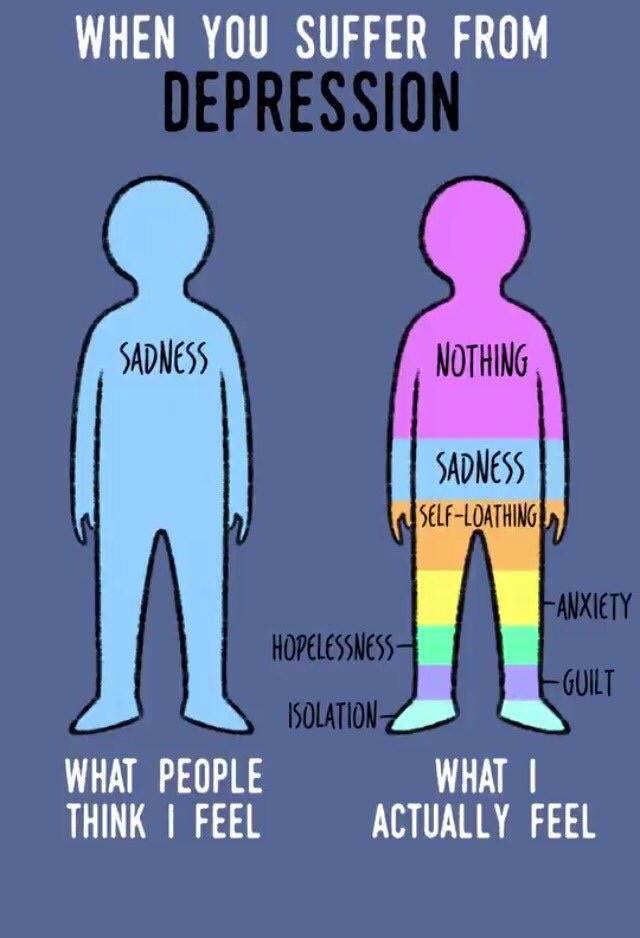
So which is it? Sadness, downcastness, distraction, sullenness, discomposure, vulnerability, hurt, a wandering mind? Yes. Welcome to depression, friends, that ever handy Wet Blanket that throws itself over our material and emotional turmoil, and life's disappointments and fears, and keeps our heads from exploding at the shocks others seem to be able to ride out with "composure."
As diabetics, we are prone to depression. Depressives are prone to diabetes. As with insulin resistance and the accretion of body fat, I find the chicken-and-egg question less valuable than recognizing a vicious cycle that requires intervention to break. As with most mind-body dynamics, there are few cleanly reciprocal dyads. Research notes the correspondence of risk factors for diabetes with those for chronic pain and depression, including poverty, low social status, susceptibility to discrimination, past injuries, physical inactivity, lower self-confidence or self-esteem, and a lack of social support.
Ben Affleck would seem to be exempt from many of these risk factors: Both his present life and his past include many elements of privilege; they also include an alcoholic (since rehabilitated) father who apparently stumbled through a series of working-class jobs, and whom he "lost"—since reconciled—at age 11. I'm sure many people would find my own responses to chronic depression inappropriate, pathetic, ludicrous. (We may find out with a forthcoming personal tour of my depression, to be published with further information on depression and diabetes research.) While sometimes the temptation to laugh at or feel superior to celebrities—or me—may be too much to resist, I hope these observations might spark a bit more empathy and a bit less judgment toward depressed people in your life—including, as needed, yourself.
Graphic sourced from Living with Invisible Illness.
