This remission dataset

documents - and provided the means of - my losing 100 pounds of fat and rendering myself, according to my doctor, "no longer diabetic" within a year of diagnosis of type 2 diabetes. Despite my doctor's use of the word at the time, I don't claim to have "cured" myself. By this expert consensus definition, I achieved remission, having reached and sustained normal levels of blood glucose (blood sugar).

Type 2 diabetics who can achieve remission, or normoglycemia (euglycemia), are as close to a cure as is possible for a disorder characterized as chronic (no cure) and progressive (only gets worse). Remission can vastly improve quality of life and can forestall T2D's usual progression through comorbidities toward premature death.

Day-to-day data are self-reported. Medical outcomes are documented by Kaiser-Permanente.
Showing posts with label diabetes. Show all posts

the poker face of depression

As part of the promotional apparatus for Batman v. Superman: Dawn of Justice.,Yahoo Movies interviewed Ben Affleck and Henry Cavill. Interviewer Tom Butler asked Cavill and Affleck to respond to the critics' "mixed response" to the film. Cavill gives a stock Hollywood reply: Critics don't matter, what matters is box office. (Cavill actually tries to state his criticism of critics more diplomatically, though his attempt totally misrepresents the nature and value of professional criticism. Of course, he uses "audience" as a euphemism for box office.) Affleck, prompted by Butler, simply says "I agree" (with Cavill).

Enter YouTube producer Sabconth, who inserts a montage/barrage of critically damning quotes, fades out Cavill's audio, digitally pans and zooms in to Affleck, and replaces the substance of Cavill's response with the first verse of Simon and Garfunkel's "The Sounds of Silence." Sabconth's text montage conceals Affleck's grin and laugh in reaction to the phrase "mixed response," and cuts before the small smile he gives after his brief answer. (Presumably incidentally, the manipulated clip suggests Cavill is a blathering fool; wrong-headed and/or deceptive as his response may be, it's not foolish. The man is doing his job.) That clip, under the title "Batman V Superman - Sad Affleck," goes viral.

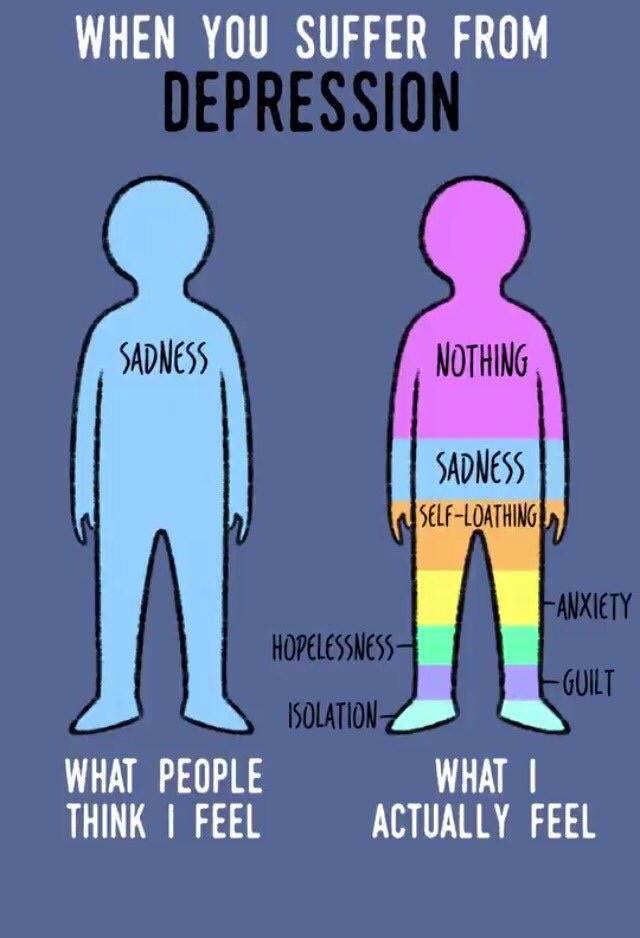
Along with some 14 million others, I Laughed Out Loud. And as soon as the clip ended, I Googled "Ben Affleck depression." Sure enough, Affleck's celebrity and recent divorce bubbled up: both "depression" over the divorce, and Depression as a cause of it. (This just in: Depressed people can be hard to live with.) I can't offer a diagnosis I'm not qualified to make of a person I've never met. I can look at a clip of an actor's unscripted reaction and hear my gut say: I recognize that face, and it resonates with what I know about myself as a chronic anxious depressive.

The Internet thought otherwise. "Sad Affleck" became a fixed phrase. Variety's Lamarco McClendon elaborated, taking Affleck to task for his downward gaze and describing him as "distraught" and "sullen," as well as "saddened." McClendon's piece begins with a taunt that Batman (Affleck) can't "hold his composure in the face of adversity," (Many of us might say that composure is exactly what Affleck held; clearly we do not work in Hollywood.) Michael Cavna's reading in The Washington Post is more sympathetic: "Affleck...looks vulnerable concerning his new superhero turn as the Dark Knight, and the mind behind those hurt eyes seems to wander..."

So which is it? Sadness, downcastness, distraction, sullenness, discomposure, vulnerability, hurt, a wandering mind? Yes. Welcome to depression, friends, that ever handy Wet Blanket that throws itself over our material and emotional turmoil, and life's disappointments and fears, and keeps our heads from exploding at the shocks others seem to be able to ride out with "composure."

As diabetics, we are prone to depression. Depressives are prone to diabetes. As with insulin resistance and the accretion of body fat, I find the chicken-and-egg question less valuable than recognizing a vicious cycle that requires intervention to break. As with most mind-body dynamics, there are few cleanly reciprocal dyads. Research notes the correspondence of risk factors for diabetes with those for chronic pain and depression, including poverty, low social status, susceptibility to discrimination, past injuries, physical inactivity, lower self-confidence or self-esteem, and a lack of social support.

Ben Affleck would seem to be exempt from many of these risk factors: Both his present life and his past include many elements of privilege; they also include an alcoholic (since rehabilitated) father who apparently stumbled through a series of working-class jobs, and whom he "lost"—since reconciled—at age 11. I'm sure many people would find my own responses to chronic depression inappropriate, pathetic, ludicrous. (We may find out with a forthcoming personal tour of my depression, to be published with further information on depression and diabetes research.) While sometimes the temptation to laugh at or feel superior to celebrities—or me—may be too much to resist, I hope these observations might spark a bit more empathy and a bit less judgment toward depressed people in your life—including, as needed, yourself.

Graphic sourced from Living with Invisible Illness.

remission defined

As reported in Endocrine Today online:
The [expert study group*] agreed upon the following definitions for patients with type 1 and type 2 diabetes:
  • Partial remission: hyperglycemia below diagnostic thresholds for diabetes; at least one year’s duration; no active pharmacologic therapy or ongoing procedures.
  • Complete remission: normal glycemic measures; at least one year’s duration; no active pharmacologic therapy or ongoing procedures.
  • Prolonged remission: complete remission of at least five years duration.
The term remission may be more accurate than the term cure because “current or potential future therapies for type 1 or type 2 diabetes will likely always leave patients at risk for relapse, given underlying pathophysiologic abnormalities and/or genetic predisposition,” the group wrote. “It may make sense to consider prolonged remission of diabetes essentially equivalent to cure.”
The group modeled its consensus definitions on existing terminology for certain malignancies such as cancer.
*The group comprised experts from pediatric and adult endocrinology, diabetes education, transplantation, metabolism, bariatric/metabolic surgery, and (for another perspective) hematology-oncology.
source: Buse JB et al. Diabetes Care. 2009;32:2133-2135.

remission? cure? control?

2003/12/16 "Looks to me like you're not diabetic anymore."
—my Kaiser Permanente doctor

Wow. I didn't think they were allowed to say that. Nor that any doctor would ever say, as mine did later in the same conversation, "You've cured yourself."

As I've learned since, only the first of these statements is true. Being "not diabetic anymore" can serve, with certain caveats, as an attainable goal in diabetes control. This is what I, along with more and more lay people and professionals, call remission.
The technical term is normoglycemia: normal, or non-diabetic, levels of blood glucose (blood sugar).

I was diagnosed as a type 2 diabetic in December of 2002, after at least three frustrating years of debilitating, bloody, scary symptoms. In January, 2003, I started an aggressive, measured program of self-treatment through diet and exercise. My health improved dramatically. Over the course of a year, I lost about a hundred pounds. Since June of that year, my blood sugar readings were consistently good enough that I began to have vague hopes that I might someday hear the word "remission"—so vague that as I made up my list of things to take up with the doctor a year after my diagnosis, that question literally didn't even enter my mind.

Suddenly I was hearing "cured yourself" and "not diabetic anymore". Sweet Jesus!

2009/01/14 "[Y]ou are not diabetic, but you aren't cured of diabetes either. It could be said that you have diabetes but you're not diabetic—but that sounds too ridiculous."
—Tom Ross, of Not Medicated Yet

After years of backsliding and recurring symptoms, I've learned that the question of cure, remission, and control is more complicated than I or my doctor had thought. As Tom Ross points out, a person can have diabetes and be "not diabetic". In the same dLife.com forum discussion, "nomorecarbs" writes:
I've had blood sugars in excess of 400, today they are usually in the seventies or eighties. If I ate a loaf of bread, I'd wind up closer to 200 than 100. Am I cured? As far as I'm concerned, it's just semantics, as long as I maintain normal blood sugars, I believe I'll avoid complications. I've been diabetic for 30 years, did develop complications, they've been reversed. There are people who've been diabetic for over 50 years, and they're complications free. There are people in their 60s who are not yet diabetic, but will be and who will develop complications. It's all in how you manage your life after diagnosis. As far as I'm concerned, it's just a word, "cure". If you mean can you live a normal life expectancy with no complications, yes, diabetes can be cured. If you mean, can you eat whatever you want, stop being physically active, and still remain healthy, no, diabetes is not "curable".

The feeds and links on this page, along with some additional information on diet and exercise, are the chief online resources I used to put myself into remission, or use to this day in the hope of returning to that state.