
stark goals, planned steps, an updated manifesto
A personal trainer I know—not “my” personal trainer; I can’t afford one—offers helpful tips from time to time, so I felt comfortable asking him for a quick take on an online trainer and nutritional adviser that I’ve been watching from a distance. He responded with a provisional “no red flags,” went on to recommend one of his own evidence-based sources on training and nutrition, and asked a follow up: What was I finding in Trainer X that I hadn’t found elsewhere? Was the potential value I was seeing absent from other sources, or did it contradict them?
I didn’t have a chat-sized answer ready. Apparently I’ve been brewing an answer, because it started to take shape today at the gym, albeit more manifesto-sized than chat-sized. As he enlarged my question, I shall enlarge his: What do I want from type 2 diabetes care and management that I’m not getting? And to what extent are those perceived lacks systemic, affecting all of us living with this chronic and progressive disorder?
I want:
I have learned that comprehensive care and management depend most on my own knowledge and efforts. So what can I do to get what I want? Probably at a minimum:

Years of setbacks and recovery demonstrate that my self-care has been a Sisyphean task, with which I can use all the help I can get. Where could I use more focus, discipline, and/or support?
Apart from my personal goals and struggles, what general improvements would I like to see in diabetes care and research?
I didn’t have a chat-sized answer ready. Apparently I’ve been brewing an answer, because it started to take shape today at the gym, albeit more manifesto-sized than chat-sized. As he enlarged my question, I shall enlarge his: What do I want from type 2 diabetes care and management that I’m not getting? And to what extent are those perceived lacks systemic, affecting all of us living with this chronic and progressive disorder?
I want:
- my feet to still be attached when I die.
- to be walking the day I die
- whether or not I am working, to have a brain capable of doing the work I do now on the day I die
- to reverse if possible, and otherwise to slow, the recent steady rise in HbA1c, and thus actual damaging levels of blood glucose.
I have learned that comprehensive care and management depend most on my own knowledge and efforts. So what can I do to get what I want? Probably at a minimum:
- Walk every day.
- Work most days; engage in intellectual activity every day.
- Build/sustain/replace muscle, i.e., do resistance/weight training. I’ve been pretty persistent at this for the last (and first!) year, with a primary focus on (machine-mediated) leg presses and a secondary focus on chest and shoulder presses to strengthen around a mild persistent repetitive strain injury. I could likely use more frequency, and possibly more variety.
- Crack the nutritional nut. At the moment, that seems to require more vegetables and minimal refined carbohydrate. With that shift, moderate fat and protein seem largely to take care of themselves; evidence suggests reducing animal sources for both. (So maybe more actual nuts.)

Years of setbacks and recovery demonstrate that my self-care has been a Sisyphean task, with which I can use all the help I can get. Where could I use more focus, discipline, and/or support?
- I’m not sure why I don’t walk and bike more. I enjoy doing both. There’s some motivational, get-off-my-buttional factor missing.
- Work. You’d think having walking-around money might be motivation enough. Apparently not.
- Food. I’ve become much more selective and strategic about what I bring home from the food bank and how I use it. Simultaneously, the food bank has become more selective in what it accepts, and there’s more protein available. It’s been too long since I’ve seen a dietician/CDE, and I have a request for a referral on my list for my primary. A higher food budget might help, too (see “Work,” above).
- I need to resume the search for a neuropsychiatrist, with the aim of addressing comorbid neuropathy and depression in some potentially integrated way.
- I was taken aback to hear one of my doctors—a good and helpful one—say “Since you won’t lose weight…” as if it were out of some perverse willfulness. How about, “Since your insulin resistance keeps you in a state of energy deprivation out of proportion to your energy intake…” Yes, I can lose weight, i.e. fat. I lost a hundred pounds in a year. And that was a full-time job. Bye-bye, 401(k)!
- That point, finally, brings us back to my friend’s question. What I would like from the physical training world, and the nutritional world, and the medical world, and society at large, is a recognition that my physical symptoms stem from a highly heritable and environmentally-triggered metabolic disorder, the nature of which is not understood—not solely from persistence in the same bad choices US culture generally makes when it comes to diet and physical activity.
- Along with the recognition that intensive behavioral intervention can improve type 2 diabetic symptoms and put the disease itself into remission, I'd like acknowledgment that underlying physiological processes will be fighting me every step of the way. (See notes on insulin resistance and pancreatic failure, below.)
- If you are going to presume to help me, I want you to be at least as current as I am on the latest and best scientific evidence about what works and does not work.
- If you presume to help me, I need you to understand the history of my struggles and what I have learned from them, and the psychosocial and socioeconomic worlds in which I live.
These last two points are common complaints from the diabetes online community (#DOC) and other chronic disease communities.
- From the diabetes industry, I’d like less sugar-coating: “a few simple lifestyle choices,” my fat ass! How about a part-time job that runs intermittently from wake to sleep every day?
- From medicine, I’d like less “good control,” a.k.a. “you’re doing well…for a diabetic” and more “You’ve got decent control. Are you ready to push on toward remission?”
- I’d also like, from medicine and research, revised standards for screening, diagnosis, and intervention. One hundred mg fasting glucose per dL of blood is not a morbidity threshold (that’s closer to 86 mg/dL); it’s a statistical all-cause mortality cliff. And it’s the diagnostic standard for “pre-diabetes.” To be declared diabetic, you have to step further into the grave—by which time pancreatic failure may be far more extensive than has been recognized.
- From research, I’d like fewer sham attempts to compare drugs to behavioral intervention that’s so inadequate as to be laughable. And of course, less throwing up of hands: “We tried behavioral treatment, and it just didn’t work!”
- At all points of care and research, I’d like recognition that in the vicious cycle of insulin resistance and body fat accumulation, it's insulin resistance that can be measured first, prior to the appearance of dyslipidemia and other components of the metabolic syndrome. Evidence suggests I didn't become diabetic because I was fat; I became fat as a symptom of insulin resistance.
- At all points of care and research, I’d like recognition that the triply symmetrical comorbidities of type 2 diabetes, depression, and poverty complicate any attempt at adequate treatment, whether based on behavior modification, medication, social support, or their clinically suitable combination. Coordinated treatment of mood and metabolism works better than either alone, and social support has demonstrated statistically significant and clinically important benefits.
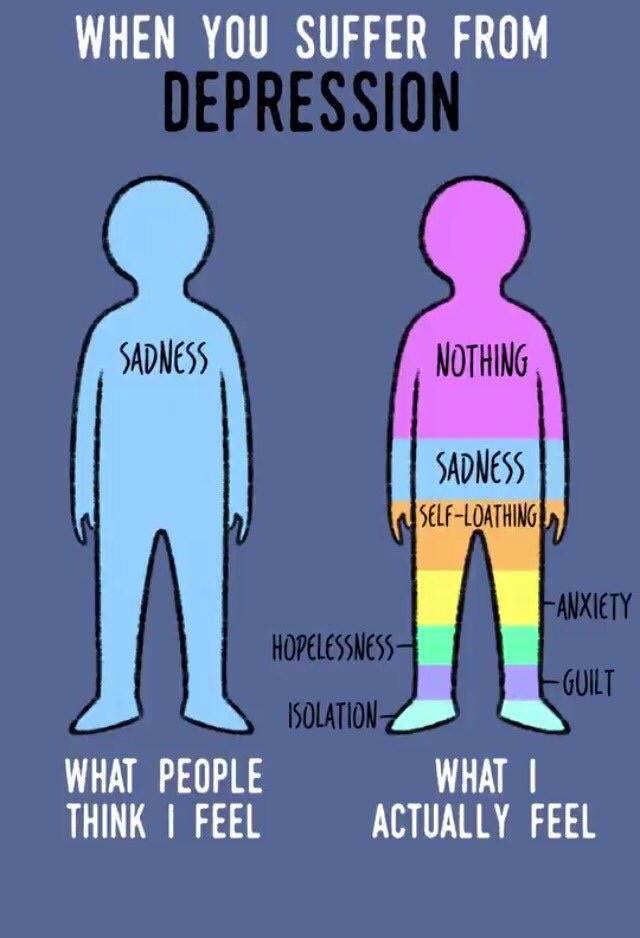
the poker face of depression
Enter YouTube producer Sabconth, who inserts a montage/barrage of critically damning quotes, fades out Cavill's audio, digitally pans and zooms in to Affleck, and replaces the substance of Cavill's response with the first verse of Simon and Garfunkel's "The Sounds of Silence." Sabconth's text montage conceals Affleck's grin and laugh in reaction to the phrase "mixed response," and cuts before the small smile he gives after his brief answer. (Presumably incidentally, the manipulated clip suggests Cavill is a blathering fool; wrong-headed and/or deceptive as his response may be, it's not foolish. The man is doing his job.) That clip, under the title "Batman V Superman - Sad Affleck," goes viral.
Along with some 14 million others, I Laughed Out Loud. And as soon as the clip ended, I Googled "Ben Affleck depression." Sure enough, Affleck's celebrity and recent divorce bubbled up: both "depression" over the divorce, and Depression as a cause of it. (This just in: Depressed people can be hard to live with.) I can't offer a diagnosis I'm not qualified to make of a person I've never met. I can look at a clip of an actor's unscripted reaction and hear my gut say: I recognize that face, and it resonates with what I know about myself as a chronic anxious depressive.
The Internet thought otherwise. "Sad Affleck" became a fixed phrase. Variety's Lamarco McClendon elaborated, taking Affleck to task for his downward gaze and describing him as "distraught" and "sullen," as well as "saddened." McClendon's piece begins with a taunt that Batman (Affleck) can't "hold his composure in the face of adversity," (Many of us might say that composure is exactly what Affleck held; clearly we do not work in Hollywood.) Michael Cavna's reading in The Washington Post is more sympathetic: "Affleck...looks vulnerable concerning his new superhero turn as the Dark Knight, and the mind behind those hurt eyes seems to wander..."
So which is it? Sadness, downcastness, distraction, sullenness, discomposure, vulnerability, hurt, a wandering mind? Yes. Welcome to depression, friends, that ever handy Wet Blanket that throws itself over our material and emotional turmoil, and life's disappointments and fears, and keeps our heads from exploding at the shocks others seem to be able to ride out with "composure."
As diabetics, we are prone to depression. Depressives are prone to diabetes. As with insulin resistance and the accretion of body fat, I find the chicken-and-egg question less valuable than recognizing a vicious cycle that requires intervention to break. As with most mind-body dynamics, there are few cleanly reciprocal dyads. Research notes the correspondence of risk factors for diabetes with those for chronic pain and depression, including poverty, low social status, susceptibility to discrimination, past injuries, physical inactivity, lower self-confidence or self-esteem, and a lack of social support.
Ben Affleck would seem to be exempt from many of these risk factors: Both his present life and his past include many elements of privilege; they also include an alcoholic (since rehabilitated) father who apparently stumbled through a series of working-class jobs, and whom he "lost"—since reconciled—at age 11. I'm sure many people would find my own responses to chronic depression inappropriate, pathetic, ludicrous. (We may find out with a forthcoming personal tour of my depression, to be published with further information on depression and diabetes research.) While sometimes the temptation to laugh at or feel superior to celebrities—or me—may be too much to resist, I hope these observations might spark a bit more empathy and a bit less judgment toward depressed people in your life—including, as needed, yourself.
Graphic sourced from Living with Invisible Illness.
Unhealthiness of Sitting Not Offset by Exercise: Meta-Analysis | Medpage Today
Greater sedentary time was associated with increased risk of adverse health outcomes including early death, even in those who otherwise exercised regularly, a meta-analysis indicated.
With data pooled from 41 primary research studies, researchers found that long periods of sitting time were positively correlated with all-cause mortality and other outcomes, after adjustment for levels of physical activity, compared with study participants reporting relatively little sitting time....
The risk was generally greater at lower levels of physical activity, according to David A. Alter, MD, PhD, at University Health Network in Toronto, and colleagues, writing in the Jan. 20 issue of Annals of Internal Medicine....
[In an accompanying editorial, commenters Brigid M. Lynch, PhD, and Neville Owen, PhD, of the Baker IDI Heart and Diabetes Institute in Melbourne, note that] it's not clear how much sedentary behavior puts a person at risk for chronic disease...
[Commenter Barry Franklin, PhD, director of the Cardiac Rehabilitation Program at William Beaumont Hospital in Royal Oak, MI,] said he thinks that the dangers of sitting should still be part of public health messaging[:] "When we talk about healthier diets, when we talk about no smoking, when we talk about a regular exercise program, we should also be including avoiding prolonged sedentary behaviors, sitting in front of a computer for hour after hour after hour."
With data pooled from 41 primary research studies, researchers found that long periods of sitting time were positively correlated with all-cause mortality and other outcomes, after adjustment for levels of physical activity, compared with study participants reporting relatively little sitting time....
The risk was generally greater at lower levels of physical activity, according to David A. Alter, MD, PhD, at University Health Network in Toronto, and colleagues, writing in the Jan. 20 issue of Annals of Internal Medicine....
[In an accompanying editorial, commenters Brigid M. Lynch, PhD, and Neville Owen, PhD, of the Baker IDI Heart and Diabetes Institute in Melbourne, note that] it's not clear how much sedentary behavior puts a person at risk for chronic disease...
[Commenter Barry Franklin, PhD, director of the Cardiac Rehabilitation Program at William Beaumont Hospital in Royal Oak, MI,] said he thinks that the dangers of sitting should still be part of public health messaging[:] "When we talk about healthier diets, when we talk about no smoking, when we talk about a regular exercise program, we should also be including avoiding prolonged sedentary behaviors, sitting in front of a computer for hour after hour after hour."
— T2D Research (@T2DRemission) February 1, 2015


Beyond Nagging: How Do Mobile Phone Diabetes Programs Drive Behavior Change?
Methods This was a mixed methods observational cohort study. Study participants were members of the University of Chicago Health Plan (UCHP) who largely reside in a working-class, urban African American community. Surveys were conducted at baseline, 3 months (mid-intervention), and 6 months (postintervention) to test the hypothesis that the intervention would be associated with improvements in self-efficacy, social support, health beliefs, and self-care. In addition, in-depth individual interviews were conducted with 14 participants and then analyzed using the constant comparative method to identify new behavioral constructs affected by the intervention.
Results The intervention was associated with improvements in 5 of 6 domains of self-care (medication taking, glucose monitoring, foot care, exercise, and healthy eating) and improvements in 1 or more measures of self-efficacy, social support, and health beliefs (perceived control). Qualitatively, participants reported that knowledge, attitudes, and ownership were also affected by the program. Together these findings were used to construct a new behavioral model.
Conclusions This study’s findings challenge the prevailing assumption that mobile phones largely affect behavior change through reminders and support the idea that behaviorally driven mobile health interventions can address multiple behavioral pathways associated with sustained behavior change.
The Diabetes Educator November/December 2014 vol. 40 no. 6 806-819 doi: 10.1177/0145721714551992 via @edifyHEALTH
Results The intervention was associated with improvements in 5 of 6 domains of self-care (medication taking, glucose monitoring, foot care, exercise, and healthy eating) and improvements in 1 or more measures of self-efficacy, social support, and health beliefs (perceived control). Qualitatively, participants reported that knowledge, attitudes, and ownership were also affected by the program. Together these findings were used to construct a new behavioral model.
Conclusions This study’s findings challenge the prevailing assumption that mobile phones largely affect behavior change through reminders and support the idea that behaviorally driven mobile health interventions can address multiple behavioral pathways associated with sustained behavior change.
The Diabetes Educator November/December 2014 vol. 40 no. 6 806-819 doi: 10.1177/0145721714551992 via @edifyHEALTH
low-carb, high-protein, grain-free, easy, batchable, portable #breakfast I look forward to trying

what they don't say (enough)
Distortions and omissions in the diabetes discourse are a recurring theme here - usually how:
* This theme was suggested by an online survey for people affected by diabetes to gather "missing" information—"gaps" in what we hear and read—to incorporate into educational videos. WEGO Health, a platform for online health activists, made donations to diabetes organizations as part of their survey promotion. I didn't know much about the sponsors at the time, but thought they were asking the right questions. Edited from the original post: 2012-02-03.
- Medical research is dominated and distorted by deep-pocketed industrial interests.
- Standards for self care and even for diagnosis are shockingly - it is no exaggeration to say fatally - inadequate.
My top-of-mind short list for the biggest diabetes information gaps* includes:
- Diabetes is complicated. Volumes of research produce inconclusive and contradictory results.
- Diabetes-related research may be badly reported, or just plain bad.
- Evaluating research, assessing risks and benefits, and devising a working strategy for self care are not helped by the cognitive deficits, depression, and fatigue associated with blood sugar highs and lows.
- Drugs used to treat diabetes and/or its comorbidities may increase the risk of death or morbidity, including onset of diabetes itself and incidence of comorbidities.
- Blacks, Hispanics, American Indians, and Pacific Islanders are known to be at higher risk for developing diabetes. Less discussed are the risks conferred by a range of circumstances: socioeconomic status, stress, sleep, inadequate health literacy and education, location, and exposure to plastics and to environmental pollution. These factors often trump genetics; they can increase diabetes incidence and/or worsen outcomes.
- Lack of professional consensus, balky insurance plans, and physicians' disregard of patient-reported data may all interfere with getting adequate testing supplies to carry out tight glucose control.
In short, diabetes usually cannot be resolved by, as one pharmaceutical company shamelessly touts, "simple changes."
Of course, those of us with type 2 diabetes have it "easy." Those with type 1 can match all of the above point for point (with some variation) besides being burdened with:
- fewer treatment options
- a more painstaking, invasive, and wearying—and typically decades longer—self-care routine
- immediate and potentially mortal risks that can come from monitoring and treatment errors
Cheery thoughts for a sunny winter's day! Well, they asked.*
Good heath and good luck,
M.
* This theme was suggested by an online survey for people affected by diabetes to gather "missing" information—"gaps" in what we hear and read—to incorporate into educational videos. WEGO Health, a platform for online health activists, made donations to diabetes organizations as part of their survey promotion. I didn't know much about the sponsors at the time, but thought they were asking the right questions. Edited from the original post: 2012-02-03.
disinformation and blame
Jan Chait issued a gem of a rant about the news media's collective villainizing of Paula Deen, and the wave of prejudice and mis/disinformation it rode:
Chait also provides plentiful links to counter the media's heaping helpings of pasture pie.There are 300 recipes for macaroni and cheese on the Food Network’s Web site[....] Mac and cheese with two cheeses. Three cheeses. Four cheeses. SEVEN cheeses! Mac and cheese with ham…with bacon…with corned beef. With heavy cream (four cups in at least one recipe). With Tater Tots.The recipes were from such celebrity chefs as Ina Garten (the Barefoot Contessa), Alton Brown, Giada De Laurentiis, Guy Fieri, and Emeril Lagasse (who once had an episode called “Pork Fat Rules.” BAM!). And, oh yeah, Paula Deen. Who, admittedly, deep-fries mac-n-cheese.But people are only complaining about Paula Deen cooking starch- and fat-laden foods. Why?[continued: DiabetesSelfManagement.com]
normal? really?
Here's a secret. When it comes to blood glucose levels, nobody knows what "normal" means.
As noted before, medical research finds increased incidence and risk of diabetic comorbidities or "complications" (late-stage symptoms) correlating with blood sugar levels currently deemed "pre-diabetic" or even normal.
We know this more precisely now, yet it's nothing new. The correlation of elevated blood glucose with morbidity and mortality is long-established; it informs our current definition of normal as fasting blood glucose under 100 mg/dL, although in an entirely inadequate way.
As long ago as 1980, impaired glucose tolerance (defined as blood sugar levels of 96 mg/dL or greater after a clinically-administered "challenge" of 50 g oral glucose), roughly doubled risk of death due to coronary heart disease.
In short, that level of post-challenge glucose intolerance, several points within today's "normal" fasting range, kills people. Quibbling over the additional 25 mg/dL that distinguish the "pre-diabetic" from the diabetic seems as useful as speculating over how many angels can dance on the head of a pin.
p.s. I was recently surprised to find an untapped prescription for glucose test strips, and was able to get it extended. I'm gathering new data on my own progress and setbacks, and should be able to publish them soon. I shall also finally incorporate into the data the standards for normoglycemia that have been tightened - obviously to my mind not enough - since my original intervention in 2003.
As noted before, medical research finds increased incidence and risk of diabetic comorbidities or "complications" (late-stage symptoms) correlating with blood sugar levels currently deemed "pre-diabetic" or even normal.
We know this more precisely now, yet it's nothing new. The correlation of elevated blood glucose with morbidity and mortality is long-established; it informs our current definition of normal as fasting blood glucose under 100 mg/dL, although in an entirely inadequate way.
As long ago as 1980, impaired glucose tolerance (defined as blood sugar levels of 96 mg/dL or greater after a clinically-administered "challenge" of 50 g oral glucose), roughly doubled risk of death due to coronary heart disease.
In short, that level of post-challenge glucose intolerance, several points within today's "normal" fasting range, kills people. Quibbling over the additional 25 mg/dL that distinguish the "pre-diabetic" from the diabetic seems as useful as speculating over how many angels can dance on the head of a pin.
p.s. I was recently surprised to find an untapped prescription for glucose test strips, and was able to get it extended. I'm gathering new data on my own progress and setbacks, and should be able to publish them soon. I shall also finally incorporate into the data the standards for normoglycemia that have been tightened - obviously to my mind not enough - since my original intervention in 2003.
eye risk before diagnosis
A recent study proposes new thresholds for predicting risk of diabetic retinopathy. Using more precise gradation in the "good control" or "prediabetic" range than comparable earlier research, Massin et al. found the following correlations among 700 French volunteers studied for ten years, and were confident in proposing them as predictive:
The takeaway? A difference in the range of half a percentage point of HbA1c, or 8 mg/dL of fasting plasma glucose, roughly doubles one's risk of potentially blinding retinopathy, from about one in 15 to one in 7. This risk correlation held even among subjects who did not develop diabetes, as currently defined, over the course of the study, retaining their diagnosis of "impaired fasting glucose".
The current diagnostic threshold for diabetes is an HbA1c of 6.5, the highest value in the proposed predictive model. Since the diagnostic threshold in terms of fasting blood glucose is 126 mg/dL, the remaining values are well below the threshold, in the so-called "prediabetic" range. Normoglycemic, neither diabetic nor prediabetic, is currently defined (at the upper end) as under 100 mg/dL fasting glucose or under 5.7% HbA1c.
I have two reasons for highlighting this study:
| HbA1c % | fasting plasma glucose mg/dL | predicted retinopathy |
|---|---|---|
| 6.0 | — | 6.0% |
| — | 108 | 8.4% |
| — | 116 | 14.0% |
| 6.5 | — | 14.8% |
The current diagnostic threshold for diabetes is an HbA1c of 6.5, the highest value in the proposed predictive model. Since the diagnostic threshold in terms of fasting blood glucose is 126 mg/dL, the remaining values are well below the threshold, in the so-called "prediabetic" range. Normoglycemic, neither diabetic nor prediabetic, is currently defined (at the upper end) as under 100 mg/dL fasting glucose or under 5.7% HbA1c.
I have two reasons for highlighting this study:
- Absent a risk of going hypoglycemic—into dangerously low blood glucose levels—there is a compelling argument for driving blood glucose levels down even if you are being told, as people in the "prediabetic" range often are, that they have "good control". A level of control that may double my risk of blindness doesn't seem to me to have much good about it. (Type 1 diabetics or others considered to be at higher risk for "going hypo" may want to check with their care team about the extent to which tight control might mitigate both short- and long-term risks.)
- If diabetes is a progressive, degenerative, debilitating, and potentially fatal disease with multiple comorbidities—it is—and if "prediabetes" is an independent mortality risk whose defining numbers successfully predict so-called "complications", or more precisely late-stage symptoms, of diabetes—it is and they do—why on Earth is the diabetic establishment still sugar-coating the reality of this disease by mucking around with terms like "prediabetes"? When will medicine catch up with science and lower the diagnostic threshold? It has done so before, and can do so again. Come the day!
remission defined
As reported in Endocrine Today online:
source: Buse JB et al. Diabetes Care. 2009;32:2133-2135.
The [expert study group*] agreed upon the following definitions for patients with type 1 and type 2 diabetes:*The group comprised experts from pediatric and adult endocrinology, diabetes education, transplantation, metabolism, bariatric/metabolic surgery, and (for another perspective) hematology-oncology.The term remission may be more accurate than the term cure because “current or potential future therapies for type 1 or type 2 diabetes will likely always leave patients at risk for relapse, given underlying pathophysiologic abnormalities and/or genetic predisposition,” the group wrote. “It may make sense to consider prolonged remission of diabetes essentially equivalent to cure.”
- Partial remission: hyperglycemia below diagnostic thresholds for diabetes; at least one year’s duration; no active pharmacologic therapy or ongoing procedures.
- Complete remission: normal glycemic measures; at least one year’s duration; no active pharmacologic therapy or ongoing procedures.
- Prolonged remission: complete remission of at least five years duration.
The group modeled its consensus definitions on existing terminology for certain malignancies such as cancer.
source: Buse JB et al. Diabetes Care. 2009;32:2133-2135.
medicine's blind spots
When I was hospitalized with a MRSA infection, I was seeing doctors and other health specialists, not counting the ward nurses, literally by the dozen. I needed surgery on my foot to clear out an infection there, and my lungs were also infected, showing “cavitary lesions” (basically holes, which for the most part filled in again after treatment). It was not clear at first that the infections were the same, since the necessary intervening pathways—the blood and the heart—showed no infection by the time the lung damage was found. So I was talking to orthopedic surgeons, cardio and infectious specialists, pulmonologists, practitioners from my primary care team, and doubtless others I can’t remember; San Francisco General Hospital seemed to stint no resources in a multidisciplinary approach to figuring out what was wrong with me and how to fix it.
Among all these doctors, one stands out: Dr. X checked in with me regularly, often several times a day. He made sure I was getting all the information that I needed from the various teams. He explained how the thinking of the teams was progressing, where there was consensus and where uncertainty. Uniquely among the doctors, he repeatedly encouraged me to sit, stand, and walk in order to avoid the pneumonia, blood clots, and other ills that can come from being too horizontal and too passive for too long. He gave me tips on finessing a refractory pharmacy that wouldn’t provide some of my drugs in the low doses that long experience and careful observation have proven to be right for me. He followed investigative paths that others overlooked. In short, Dr. X was smart, curious, analytical, investigative, practical, empathetic, and clearly committed to the best outcomes for his patients.
So what does the infection, and what do the virtues of Dr. X, have to do with my diabetes?
The infection entered through an ulcer on my foot. For a long time, we have been considering these ulcers to be “diabetic”. Based in part on what we learned through the hospitalization, and in part on my history, and in part on the fact that I have well-advanced peripheral neuropathy that does not correspond to the level of blood glucose control I exhibit, it is probably more accurate to think of the ulcers as neuropathic, and the neuropathy itself as idiopathic—meaning we don’t know what causes it. It is possible that the diabetes may be complicating or exacerbating any neuropathic effects. The hospitalization also taught me, indirectly, that I have stance and gait issues that definitely intensify any damaging effects of the neuropathy.
Dr. X, because he seems to share them, illustrates the pervasiveness of two blind spots in medicine:
I’ve been diagnosed for seven years, and was arguably symptomatic for at least four years before that. I have measurable insulin resistance. I can readily show you that my blood glucose level will respond to a half cup of white rice dramatically differently than would that of a non-diabetic. If my blood sugar levels are allowed to rise unchecked, my weight zooms out of control and I get lethargic and stupid. My skin is fragile, will break under mild pressure, and once broken is slow to heal. I’ve lived for eleven years with spates of ulcers, including weeks of visible meat (my own) and most recently a slow-healing but consistently “clean” ulcer that suddenly erupted with a life-threatening infection. And yet the medical mind—absent a drug, absent a medical “magic bullet” that it can point to and congratulate itself on for “fixing” me—questions the diagnosis before it expresses any curiosity about what I’m doing right to keep my numbers as good as they are.
Consider two other conditions I have:
So why should the medical mind, seeing diabetes under control, leap toward wishing it retroactively away? Why are the precise calculations I perform each day as I manage my diet of less interest to my caregivers than finding and adjusting the correct dose of my ACE inhibitors and my statins?
This must change.
Among all these doctors, one stands out: Dr. X checked in with me regularly, often several times a day. He made sure I was getting all the information that I needed from the various teams. He explained how the thinking of the teams was progressing, where there was consensus and where uncertainty. Uniquely among the doctors, he repeatedly encouraged me to sit, stand, and walk in order to avoid the pneumonia, blood clots, and other ills that can come from being too horizontal and too passive for too long. He gave me tips on finessing a refractory pharmacy that wouldn’t provide some of my drugs in the low doses that long experience and careful observation have proven to be right for me. He followed investigative paths that others overlooked. In short, Dr. X was smart, curious, analytical, investigative, practical, empathetic, and clearly committed to the best outcomes for his patients.
So what does the infection, and what do the virtues of Dr. X, have to do with my diabetes?
The infection entered through an ulcer on my foot. For a long time, we have been considering these ulcers to be “diabetic”. Based in part on what we learned through the hospitalization, and in part on my history, and in part on the fact that I have well-advanced peripheral neuropathy that does not correspond to the level of blood glucose control I exhibit, it is probably more accurate to think of the ulcers as neuropathic, and the neuropathy itself as idiopathic—meaning we don’t know what causes it. It is possible that the diabetes may be complicating or exacerbating any neuropathic effects. The hospitalization also taught me, indirectly, that I have stance and gait issues that definitely intensify any damaging effects of the neuropathy.
Dr. X, because he seems to share them, illustrates the pervasiveness of two blind spots in medicine:
- Like my primary provider, Dr. X refers to glucose levels for good diabetic control as "normal", when in fact normoglycemia differs from "good control" levels by a significant 25 mg/dL (or so) of blood glucose: roughly half a percentage point on the Hb A1c scale. In my case, the distinction may mark the difference between my feet being ulcerous, or subject to Charcot collapses, or healthy. (To be fair to Dr. X, we never had a conversation in which I tried to pin him down on this distinction.)
- Faced with well-controlled diabetes, Dr. X. says it is “not unreasonable to question the diagnosis”.
I’ve been diagnosed for seven years, and was arguably symptomatic for at least four years before that. I have measurable insulin resistance. I can readily show you that my blood glucose level will respond to a half cup of white rice dramatically differently than would that of a non-diabetic. If my blood sugar levels are allowed to rise unchecked, my weight zooms out of control and I get lethargic and stupid. My skin is fragile, will break under mild pressure, and once broken is slow to heal. I’ve lived for eleven years with spates of ulcers, including weeks of visible meat (my own) and most recently a slow-healing but consistently “clean” ulcer that suddenly erupted with a life-threatening infection. And yet the medical mind—absent a drug, absent a medical “magic bullet” that it can point to and congratulate itself on for “fixing” me—questions the diagnosis before it expresses any curiosity about what I’m doing right to keep my numbers as good as they are.
Consider two other conditions I have:
- High blood pressure—Even when sick, hospitalized and under severe stress, my blood pressure readings were virtually all normal, controlled by an ACE inhibitor.
- Dyslipidemia (unhealthy levels of blood fats, loosely termed “high cholesterol”)—This
iswas [at the time of this post] controlled with statins, and my current numbers are actually pretty good, in some cases better than the standard targets.
So why should the medical mind, seeing diabetes under control, leap toward wishing it retroactively away? Why are the precise calculations I perform each day as I manage my diet of less interest to my caregivers than finding and adjusting the correct dose of my ACE inhibitors and my statins?
This must change.
remission? cure? control?
2003/12/16 "Looks to me like you're not diabetic anymore."
—my Kaiser Permanente doctor
Wow. I didn't think they were allowed to say that. Nor that any doctor would ever say, as mine did later in the same conversation, "You've cured yourself."
As I've learned since, only the first of these statements is true. Being "not diabetic anymore" can serve, with certain caveats, as an attainable goal in diabetes control. This is what I, along with more and more lay people and professionals, call remission.
The technical term is normoglycemia: normal, or non-diabetic, levels of blood glucose (blood sugar).
I was diagnosed as a type 2 diabetic in December of 2002, after at least three frustrating years of debilitating, bloody, scary symptoms. In January, 2003, I started an aggressive, measured program of self-treatment through diet and exercise. My health improved dramatically. Over the course of a year, I lost about a hundred pounds. Since June of that year, my blood sugar readings were consistently good enough that I began to have vague hopes that I might someday hear the word "remission"—so vague that as I made up my list of things to take up with the doctor a year after my diagnosis, that question literally didn't even enter my mind.
Suddenly I was hearing "cured yourself" and "not diabetic anymore". Sweet Jesus!
2009/01/14 "[Y]ou are not diabetic, but you aren't cured of diabetes either. It could be said that you have diabetes but you're not diabetic—but that sounds too ridiculous."
—Tom Ross, of Not Medicated Yet
After years of backsliding and recurring symptoms, I've learned that the question of cure, remission, and control is more complicated than I or my doctor had thought. As Tom Ross points out, a person can have diabetes and be "not diabetic". In the same dLife.com forum discussion, "nomorecarbs" writes:
The feeds and links on this page, along with some additional information on diet and exercise, are the chief online resources I used to put myself into remission, or use to this day in the hope of returning to that state.
—my Kaiser Permanente doctor
Wow. I didn't think they were allowed to say that. Nor that any doctor would ever say, as mine did later in the same conversation, "You've cured yourself."
As I've learned since, only the first of these statements is true. Being "not diabetic anymore" can serve, with certain caveats, as an attainable goal in diabetes control. This is what I, along with more and more lay people and professionals, call remission.
The technical term is normoglycemia: normal, or non-diabetic, levels of blood glucose (blood sugar).
I was diagnosed as a type 2 diabetic in December of 2002, after at least three frustrating years of debilitating, bloody, scary symptoms. In January, 2003, I started an aggressive, measured program of self-treatment through diet and exercise. My health improved dramatically. Over the course of a year, I lost about a hundred pounds. Since June of that year, my blood sugar readings were consistently good enough that I began to have vague hopes that I might someday hear the word "remission"—so vague that as I made up my list of things to take up with the doctor a year after my diagnosis, that question literally didn't even enter my mind.
Suddenly I was hearing "cured yourself" and "not diabetic anymore". Sweet Jesus!
2009/01/14 "[Y]ou are not diabetic, but you aren't cured of diabetes either. It could be said that you have diabetes but you're not diabetic—but that sounds too ridiculous."
—Tom Ross, of Not Medicated Yet
After years of backsliding and recurring symptoms, I've learned that the question of cure, remission, and control is more complicated than I or my doctor had thought. As Tom Ross points out, a person can have diabetes and be "not diabetic". In the same dLife.com forum discussion, "nomorecarbs" writes:
I've had blood sugars in excess of 400, today they are usually in the seventies or eighties. If I ate a loaf of bread, I'd wind up closer to 200 than 100. Am I cured? As far as I'm concerned, it's just semantics, as long as I maintain normal blood sugars, I believe I'll avoid complications. I've been diabetic for 30 years, did develop complications, they've been reversed. There are people who've been diabetic for over 50 years, and they're complications free. There are people in their 60s who are not yet diabetic, but will be and who will develop complications. It's all in how you manage your life after diagnosis. As far as I'm concerned, it's just a word, "cure". If you mean can you live a normal life expectancy with no complications, yes, diabetes can be cured. If you mean, can you eat whatever you want, stop being physically active, and still remain healthy, no, diabetes is not "curable".
The feeds and links on this page, along with some additional information on diet and exercise, are the chief online resources I used to put myself into remission, or use to this day in the hope of returning to that state.
Subscribe to:
Posts (Atom)